
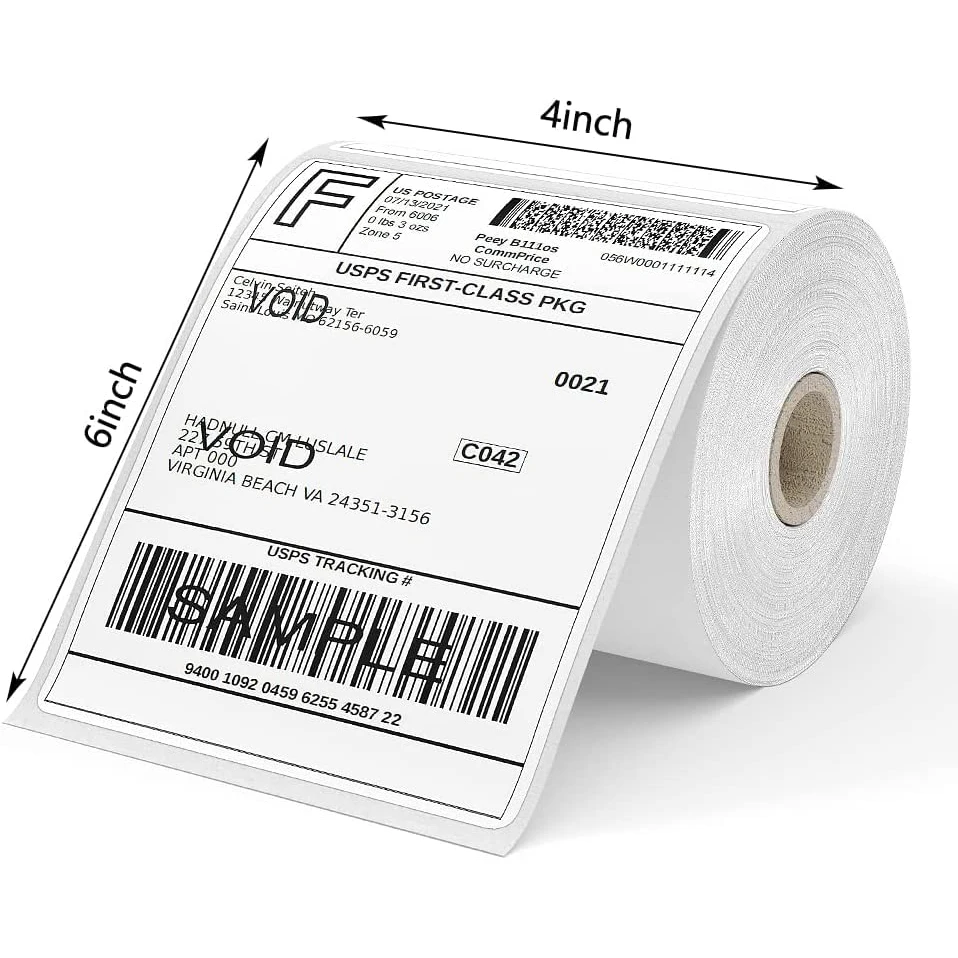
Four by six inches — 100 x 150 mm — is the default shipping label size for couriers, marketplaces and warehouse printers. It is large enough for an address block, a routing barcode and a reference number, and it fits the common desktop thermal printers.
The specification that decides whether a roll works is not the size. It is the combination of print method, top-coat, core diameter and wind direction.
Direct thermal or thermal transfer
Direct thermal 4x6 labels are the standard for parcel shipping: no ribbon, simple operation, and enough durability for a journey measured in days. The image is heat-sensitive and will fade under sustained light or heat, which is acceptable for a waybill and not acceptable for a long-life asset tag. Thermal transfer labels use a ribbon and produce a darker, more durable image on paper or synthetic stock; they suit labels that must survive months or years, or that face abrasion and chemicals.
Top-coat: the difference you feel
A top-coated direct thermal paper resists abrasion, water and oils far better than an economy uncoated grade. On a parcel that passes through several hubs, the barcode is the part that must not rub away. Top-coat also protects the printhead from paper dust. The cost difference per roll is small compared with a failed delivery, which is why top-coated stock is the sensible default for outbound shipping.
Core, wind and roll geometry
Desktop printers commonly take 25 mm or 40 mm cores; industrial machines vary. Labels can be wound face-out or face-in, and the web can be gap-separated, notch-separated or black-marked. The printer's sensor must match the gap type. Getting the wind direction wrong is the most common ordering error: the labels feed upside down or the sensor misses the gap, and the roll is unusable without rewinding.
Printer setup and storage
Set the printer for direct thermal or transfer as appropriate, calibrate the media sensor, and set darkness so bars are crisp without bleeding. Too much heat shortens printhead life and can smear; too little produces a code that scans only at close range. Store rolls cool and dry, away from sunlight, and rotate stock — direct thermal paper has a shelf life and will darken in a hot warehouse. Clean the printhead regularly; adhesive bleed and paper dust are the usual causes of white lines through a barcode.
Ähnliche Produkte



FAQ
What size is a 4x6 label in millimetres?
4 x 6 inches is approximately 102 x 152 mm; the common metric equivalent sold as 4x6 is 100 x 150 mm. Check which your printer and courier template expect, because the difference affects alignment.
Can I use 4x6 labels for FBA or marketplace shipments?
Yes, provided the label matches the marketplace's required size and barcode specification. Always print a test label and scan it before a production run.
Why do my 4x6 labels fade in the warehouse?
Direct thermal paper reacts to heat and light. Storage near windows, heaters or warm machinery accelerates fading; thermal transfer with a ribbon is the fix where long life is required.
Verwandte Materialien
Ähnliche Beiträge
Wie verhindert man das Verblassen adhäsiver Thermopapierrollen?
Discover proven methods to stop thermal paper rolls from fading. Use quality materials, optimize storage, and apply protective coatings for long-lasting labels. Learn more.
Warum lässt sich ein Thermoetikett für Logistikaufträge schnell drucken?
Need faster label printing in logistics? Thermal labels eliminate ink drying & ribbon alignment—cutting print time by 60%. Boost throughput now.
Anwendungen von Thermotransfer-Etiketten in der Fertigung
Struggling with label durability, traceability, or compliance in manufacturing? Thermal transfer labels solve moisture, smudge, and barcode-read issues. Boost ROI & uptime—get your custom solution today.
Ähnliche Suchbegriffe
Send your printer model and courier template — we will confirm core size, wind direction and whether top-coated direct thermal is enough.