
Most labelling problems that look like printer faults are media problems. A thermal printer can only produce a stable image if the label surface matches the printing method: direct thermal paper reacts to heat, thermal transfer paper takes ink from a ribbon. Put the wrong media in the machine and the result is a faint code, a dirty printhead or a label that fades in a warehouse window.
This guide covers the practical differences, the sizes that are actually used in shipping and retail, and the questions worth answering before ordering a roll.
Direct thermal: no ribbon, limited life
Direct thermal paper carries a heat-sensitive coating. The printhead darkens it directly, so there is no ribbon, no ribbon waste and less maintenance. It is the standard choice for shipping labels, courier waybills and short-life barcode labels. The trade-off is durability: the image is sensitive to heat, sunlight and some chemicals, and it will fade over time. For parcels that will be scanned within days or weeks, that is usually acceptable; for assets labelled for years, it is not. A top-coated direct thermal grade resists abrasion and moisture better than an uncoated economy grade.
Thermal transfer: ribbon, longer life
Thermal transfer uses a ribbon that melts onto the label. Wax ribbons suit paper labels and general barcodes; wax-resin and resin ribbons are used where abrasion, heat or chemicals are a factor, and resin is the normal choice for synthetic films. Thermal transfer produces a darker, more durable image and works with a much wider range of face materials, at the cost of ribbon handling and slightly more setup.
Sizes and formats that are actually used
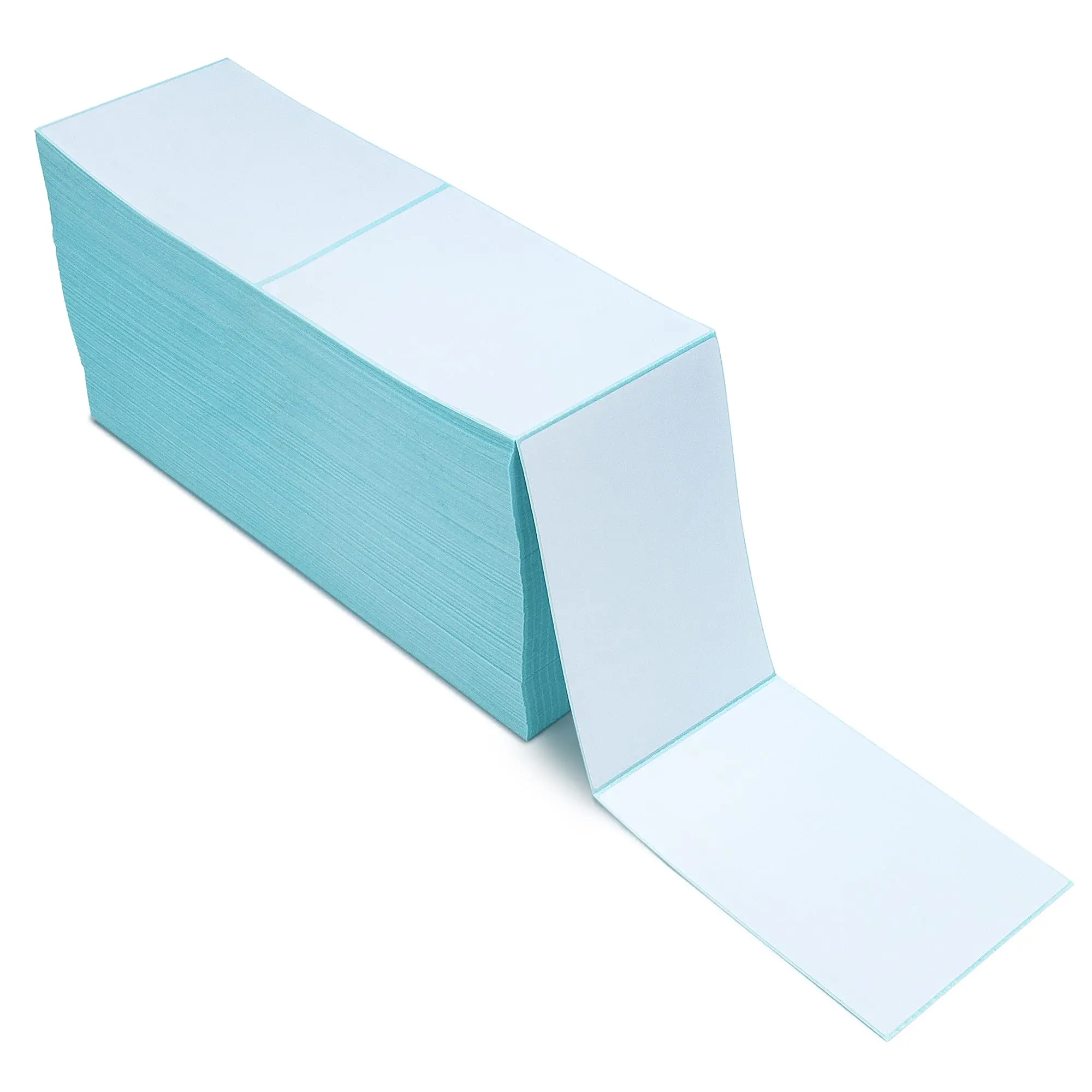
In logistics, 4x6 inch (100 x 150 mm) is the dominant shipping label, usually on rolls with a 25 mm or 40 mm core and a gap between labels. Retail and shelf labelling tends to use smaller formats, often 50 x 25 mm or 75 x 25 mm, sometimes with two or three labels across the web. Desktop printers generally take 25–40 mm cores and narrower webs; industrial printers handle larger rolls and higher speeds. The roll direction — labels facing out or in — must match the printer, and it is the single most common ordering mistake.
Storage and handling
Direct thermal stock should be kept cool, dry and away from direct sunlight, and used within the shelf life stated by the supplier. Labels stored near a window or a heat source can darken or lose contrast before they are ever printed. Printheads should be cleaned regularly with approved swabs, because adhesive bleed and paper dust are the usual causes of white lines through a barcode.
Ähnliche Produkte



FAQ
Can I use thermal labels in a laser printer?
No. Direct thermal paper is designed to react to heat, and the fuser in a laser printer runs hot enough to darken or damage it. Use laser-rated label sheets for laser printers.
Why do my labels fade after a few months?
Almost always because direct thermal paper was used where long life was needed, or because the labels were stored or displayed in heat and sunlight. Switch to thermal transfer with a suitable ribbon for anything that must last.
Which core size should I order?
Match the core to the printer spindle. Desktop machines commonly use 25 mm or 40 mm cores; industrial machines vary. Send the printer model and we will confirm the core, web width and wind direction.
Verwandte Materialien
Ähnliche Beiträge
Wie man Farbbänder auf Thermotransfer-Etiketten abstimmt
Struggling to match ribbons with thermal transfer labels? Discover how wax, resin, and hybrid ribbons pair with label materials for durable, high-quality printing. Get expert tips now.
Warum lässt sich ein Thermoetikett für Logistikaufträge schnell drucken?
Need faster label printing in logistics? Thermal labels eliminate ink drying & ribbon alignment—cutting print time by 60%. Boost throughput now.
Anwendungen von Thermotransfer-Etiketten in der Fertigung
Struggling with label durability, traceability, or compliance in manufacturing? Thermal transfer labels solve moisture, smudge, and barcode-read issues. Boost ROI & uptime—get your custom solution today.
Ähnliche Suchbegriffe
Tell us the printer model and what the label has to survive — we will recommend direct thermal or thermal transfer media and the right core size.