Adhesive paper is a sandwich: a printable face, a pressure-sensitive adhesive and a release liner. Most buying decisions focus on the face because that is what the customer sees, but the adhesive is what determines whether the label is still attached a week later.
This page covers the three choices that matter — face, glue and liner — and the surfaces where standard combinations fail.
Face: paper or film
Coated paper is the economical default for dry goods, cartons and shelf labels. It prints well, takes varnish and foil, and is available in gloss and matte. Thermal paper is for variable data and short life. Film — PET or PP — is chosen for water resistance, abrasion resistance and conformability on curved or flexible packaging. The face also sets the print method: paper suits flexo, offset, laser and inkjet; film usually needs a resin ribbon for thermal transfer.
Adhesive: the part that fails first
Permanent acrylic is general purpose and performs on glass, metal and coated board. Low-surface-energy plastics such as PP and PE need a stronger or specifically formulated adhesive, otherwise edges lift. Chilled and frozen products need a glue that stays tacky at low temperature and tolerates condensation during application. High-tack grades are used on recycled corrugated board, which is dusty and rough. Removable adhesives suit promotions, price labels and anything that may need repositioning, but they have a shorter shelf life and lower final bond.
Liner and format
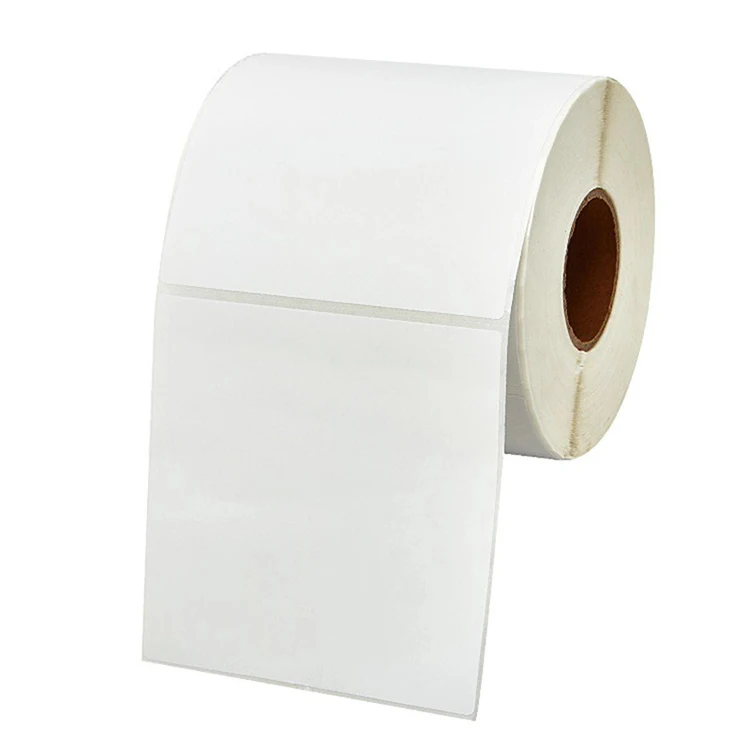
Glassine is the standard liner for paper labels; film liners are used where dimensional stability through the printer is critical. Sheets suit short runs and desktop printing, rolls suit volume and automatic application. Die-cut rolls need a gap, notch or black mark that matches the printer's sensor, and the wind direction must match the machine. These are the details that most often turn a correct material into an unusable roll.
Specifying without over-buying
Send the surface, the service temperature, the expected life, whether the label will be applied by hand or machine, and whether it must be removable. If the product is oily, dusty, curved or frozen, say so at quoting — those four conditions account for most adhesion failures. A standard permanent paper label is the right answer more often than not; the cost of over-specifying film is real, and a sample on the actual container settles the question faster than a datasheet.
Produits associés
FAQ
What is the difference between adhesive paper and sticker paper?
They describe the same construction. 'Adhesive paper' is the industry term for the coated face plus pressure-sensitive glue and liner; 'sticker paper' is the consumer term, usually sold in sheets for desktop printing.
Is adhesive paper waterproof?
Paper-based stock is not. It resists light handling but degrades with water and oil. For water resistance the face must be a PET or PP film.
Can I get adhesive paper in custom shapes?
Yes, with a cutting die. Standard rectangles and circles are the most economical; custom silhouettes carry a die cost and a minimum run.
Matériaux associés
Articles associés
Pourquoi le papier autocollant brillant valorise-t-il l'emballage produit ?
Discover how glossy sticker paper enhances product packaging with unmatched print clarity, durability, and strong adhesion. Elevate brand identity and stand out on shelves—learn more.
Où trouver du papier autocollant holographique sur mesure ?
Need premium custom holographic sticker paper for branding or security? Discover vetted B2B suppliers with MOQ flexibility, OEM support, and fast lead times. Request samples now.
Pourquoi l'adhésif papier est-il indispensable aux travaux manuels ?
Discover how acid-free paper adhesive prevents yellowing, warping, and bleeding in scrapbooking, bookbinding, and archival projects. Learn which glue lasts 100+ years.
Mots-clés associés
Tell us the surface and service conditions — we will recommend a face, adhesive and liner, and send a sample on your container.