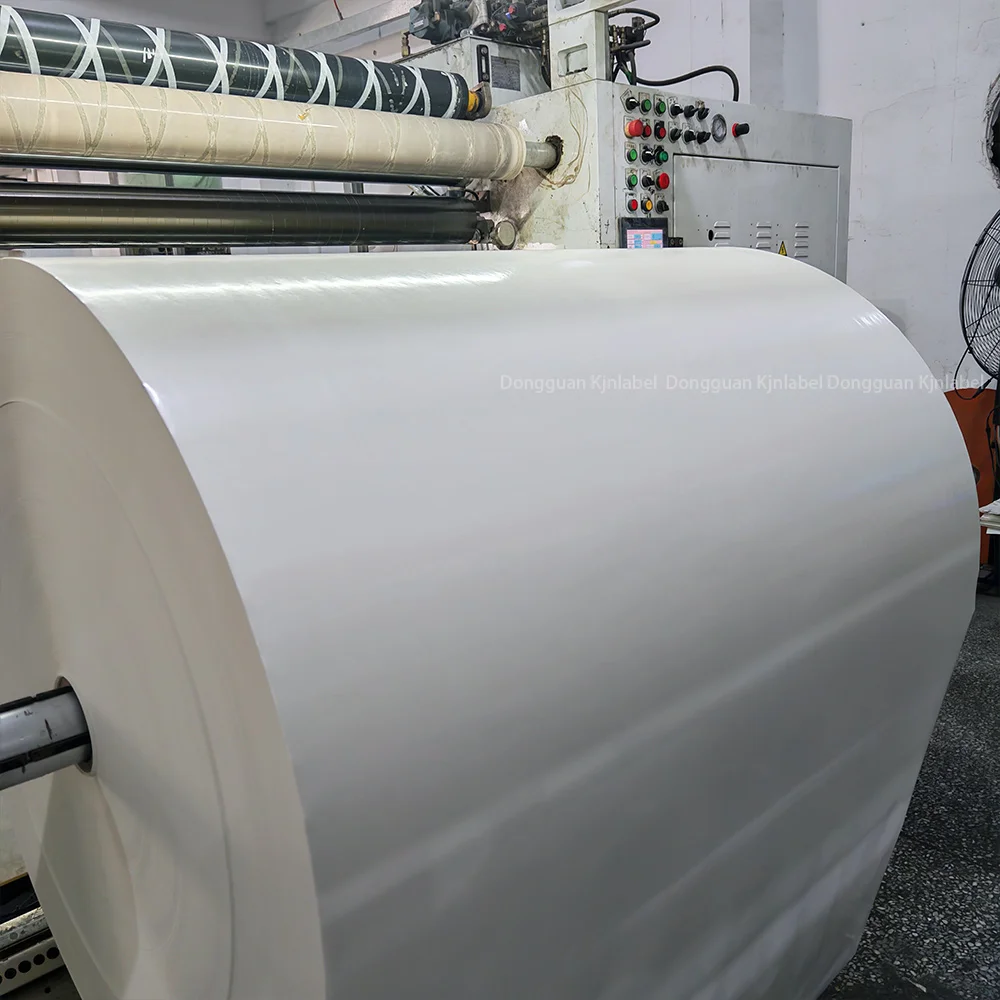
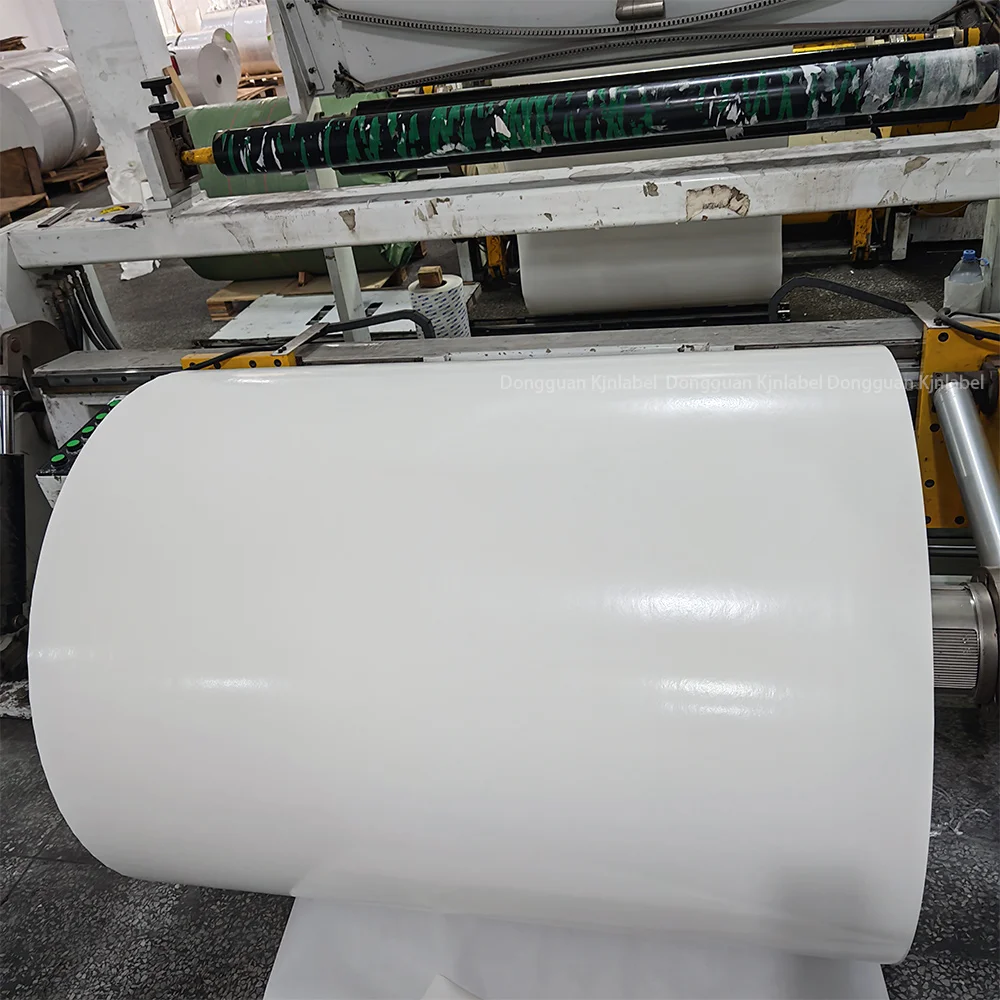
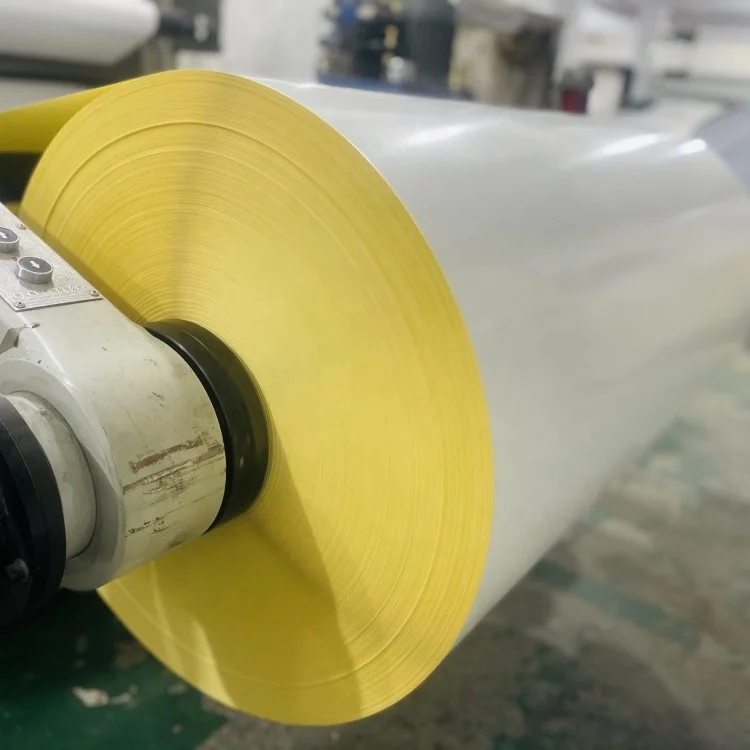
PP labels are made from biaxially oriented polypropylene film. The orientation is what gives the film its strength at low thickness: a 50 micron PP face is tougher than a much heavier paper sheet, and it does not absorb anything.
That combination — thin, strong, impervious — is why PP dominates on bottles, tubes, chilled packs and anything that gets handled with wet hands.
White, opaque or clear
White PP is the workhorse: it prints with good contrast and reads as a conventional label. Opaque grades block what is underneath, which matters on dark or printed containers. Clear PP gives the no-label look on glass and clear plastic, where the product itself is the visual. Surface finish also varies — gloss for photographic depth, matte to reduce glare and hide scuffs. On a curved bottle, a clear gloss label shows every trapped bubble, so application technique matters as much as the material.
Why PP beats paper on the same bottle
Paper absorbs moisture and oil, then cockles and lifts at the edges. On a chilled bottle, condensation forms immediately and a paper label can look tired before the product reaches the shelf. PP does not absorb, so it keeps its shape and its print. On a squeezable pack, paper creases along the flex line; PP flexes and returns. The trade-off is cost per square metre and a slightly less forgiving print surface, which is why PP tends to appear where the environment justifies it.
Adhesive: PP is a low-energy surface to stick to
The film face is only half the problem. PP, PE and poly bags are low-surface-energy plastics, and a general-purpose permanent adhesive that grips glass perfectly may not hold on them. LSE-specific acrylics are formulated for these surfaces. On a squeezable bottle the adhesive must also flex without creeping, and on a chilled pack it must stay tacky through condensation at application. Where the label may need removal, a removable grade exists, but it has a shorter shelf life and a lower final bond.
Printing and converting PP
PP takes flexo and UV offset well, with corona treatment used to raise surface energy before printing. For variable data, thermal transfer needs a resin ribbon — wax alone will not anchor to film. Die-cutting is straightforward, but the film's low stiffness means the web tension on press has to be controlled: too much and the film stretches, throwing registration out over a long run. Roll winding should be firm but not tight enough to trap air, which shows as a ghost on the finished label.
Specifying a PP label
Send the container material, whether it is squeezable, the fill and storage temperature, and the expected life. A 50 micron white PP with a permanent LSE acrylic covers most beverage, household and personal care work. Thicker film suits large-format labels where stiffness helps application; thinner film conforms better to tight curves. If the pack will be chilled or frozen, say so — the adhesive, not the film, is what usually needs to change.
Related Products
FAQ
Are PP labels waterproof?
Yes. The film does not absorb water, so the label keeps its shape and print in wet or chilled conditions. The ink system still matters, and lamination helps on heavily handled packs.
Can PP labels be printed with thermal transfer?
Yes, with a resin ribbon. Wax and wax-resin ribbons do not anchor reliably to film and will smear.
PP or PET?
PP is softer, cheaper and better on squeezable packs. PET is stiffer, has higher heat resistance and better dimensional stability, and is preferred for durable equipment labels.
Will PP labels stick to my poly bags?
Only with a low-surface-energy adhesive. A standard permanent grade will lift from PE and PP bags.
Related Materials
- Glossy Sticker Paper: Where the Shine Helps and Where It Hurts
- Transparent Sticker Paper: Film Choice, Print and the No-Label Finish
- Holographic Sticker Paper: Security, Tamper Evidence and Print Options
- Inkjet Printable Sticker Paper: Coating, Weight and Printer Setup
- Inkjet Vinyl Sticker Paper: Waterproof Sheets That Print and Cut Cleanly
Related Articles
Why PP Sticker Is Suitable for Outdoor Signage?
Discover how PP stickers withstand extreme weather, resist wear, and deliver vivid prints for long-lasting outdoor signage. Eco-friendly, adaptable, and cost-effective. Learn more.
Applications of Thermal Transfer Labels in Manufacturing
Struggling with label durability, traceability, or compliance in manufacturing? Thermal transfer labels solve moisture, smudge, and barcode-read issues. Boost ROI & uptime—get your custom solution today.
Why PP Sticker Is Water-Resistant?
Discover why PP stickers resist water and how their durable, weatherproof design makes them ideal for outdoor and industrial applications. Learn more now.
Related Keywords
Send the container material and storage conditions — we will specify face thickness, finish and an LSE adhesive, and send samples for a squeeze and chill test.