A clear barcode label does one job that paper cannot: it carries a scannable code without hiding what is underneath. On glass bottles, coloured cartons, cosmetics and retail packaging, a transparent film label keeps the brand surface visible while still giving the scanner a crisp, high-contrast symbol.
We produce the label material itself — face film, adhesive and liner — then slit and die-cut it to the roll format your printer needs. That means the construction can be matched to the surface, the printer and the environment instead of being picked from a catalogue.
What the label is actually made of
Clear labels are built from three layers. The face is a transparent film, usually PET for dimensional stability and heat resistance, or PP for a softer, more conformable feel on curved containers. The adhesive is normally a permanent acrylic, chosen because it stays clear over time instead of yellowing like some rubber-based systems. The liner is a silicone-coated glassine or PET carrier that releases cleanly in the printer and on the applicator. Each layer affects the final look: a thicker PET face reads flatter on a bottle, while a thinner PP film follows the curve and disappears more completely at the edges.
Printing and scanning performance
Transparent film needs the right print method. For thermal transfer, a resin ribbon is normally used because wax ribbons do not anchor well to film and can smear under abrasion. The symbol itself should be printed with enough contrast — on a clear label the code usually sits on a white printed block or a white backing patch, otherwise the dark bars compete with whatever is behind the bottle. For laser or inkjet sheets, a top-coated film accepts toner or ink without beading. If the label will be scanned at a distance or at speed, test the first-read rate on the actual product rather than on a white sample sheet.
Where clear labels earn their cost
They are usually specified where the packaging is part of the product: cosmetics and personal care, premium beverages, glass and clear plastic containers, and retail goods where a white paper label would break the design. They also suit asset and security labelling on dark or patterned surfaces. On rough or highly textured surfaces, a clear label can trap air and show silvering, so a thinner, softer film or a micro-textured adhesive is a better match than a stiff PET.
Specifying a clear label order
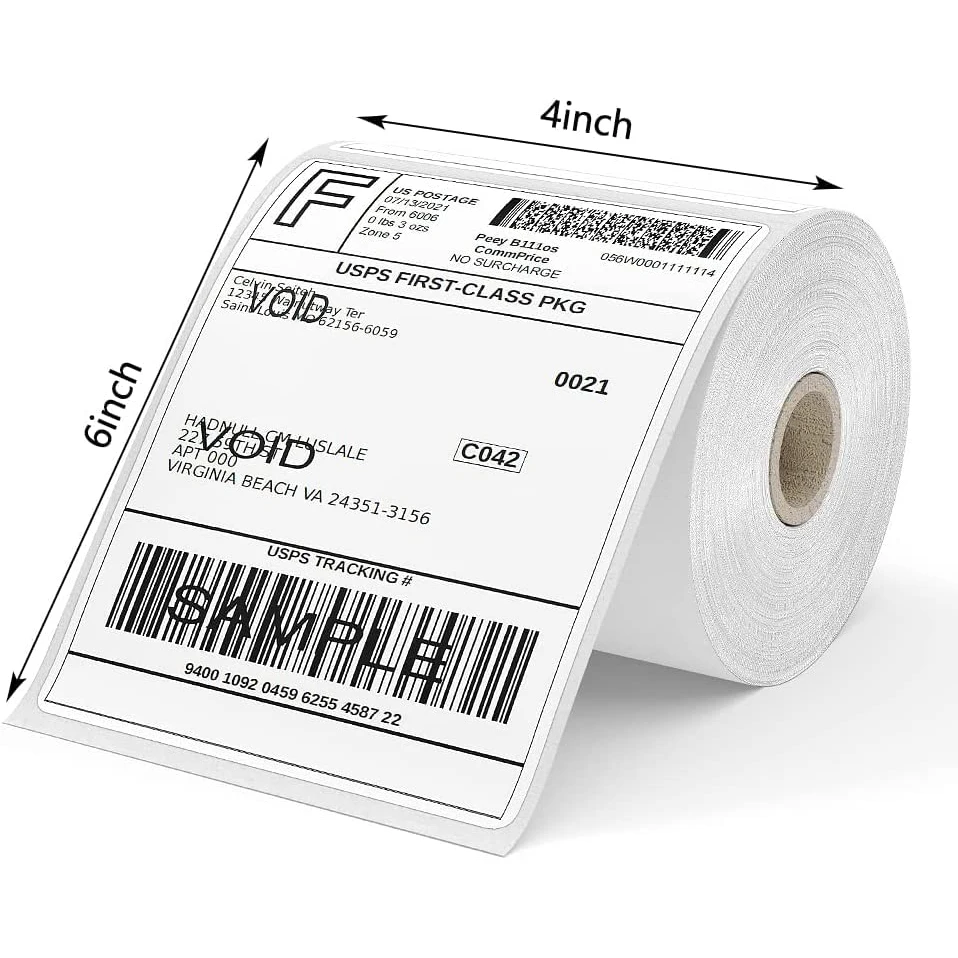
Four details decide whether the roll works in your printer: face film and thickness, adhesive type, liner and core size, and the direction the labels are wound. Send the printer model, the label size, the surface the label will be applied to, and whether the code will be printed in-house or supplied pre-printed. We can slit to the width you need and supply sample rolls so the first-read rate and adhesion can be checked before a production run.
Related Products



FAQ
Will a clear barcode label scan reliably?
Yes, provided the symbol has contrast behind it. On clear containers the usual approach is to print the barcode over a white patch, or to apply the label over a white area of the packaging. Scanning should always be tested on the filled product, not on a flat sample.
Can clear labels go through a thermal printer?
They can, but they need a resin ribbon and a printer rated for film media. Wax ribbons are intended for paper and will not bond properly to PET or PP, which shows up as smudging or missing bars after abrasion.
Do transparent labels turn yellow?
Acrylic adhesives and quality PET films are chosen specifically to resist yellowing. Cheap rubber-based adhesives and unprotected films are the usual cause of discolouration, especially under UV light or heat.
Related Materials
Related Articles
How to Keep Adhesive Thermal Paper Roll from Fading?
Discover proven methods to stop thermal paper rolls from fading. Use quality materials, optimize storage, and apply protective coatings for long-lasting labels. Learn more.
Why Thermal Label Is Quick to Print for Logistics Orders?
Need faster label printing in logistics? Thermal labels eliminate ink drying & ribbon alignment—cutting print time by 60%. Boost throughput now.
Applications of Thermal Transfer Labels in Manufacturing
Struggling with label durability, traceability, or compliance in manufacturing? Thermal transfer labels solve moisture, smudge, and barcode-read issues. Boost ROI & uptime—get your custom solution today.
Related Keywords
Send us your label size, printer model and application surface — we will recommend a film and adhesive combination and cut a sample roll.